Self-Loading Concrete Mixer for Sale
Self-Loading Concrete Mixers are a practical choice for jobs with dispersed pours, limited ready-mix support, or a strong need to control batching close to the work front. Compared with generic alternatives, the machine or system gives the buyer tighter control over how concrete is mixed, stored, or delivered around the actual job workflow.
Typical applications include housing plots, village roads, municipal drainage, remote infrastructure work. In these scenarios, buyers normally care less about headline brochure claims and more about whether the equipment improves daily control, reduces coordination friction, and fits the labor, transport, and service conditions of the project.
BatchMixPro positions this product around buyers who need controlled on-site concrete production without the cost and complexity of a full batching plant. The current range covers 1.2 to 6.5 m3 drums with 55 kW to 110 kW diesel, plus export-ready packing, startup spare-parts support, and configuration advice for overseas buyers.
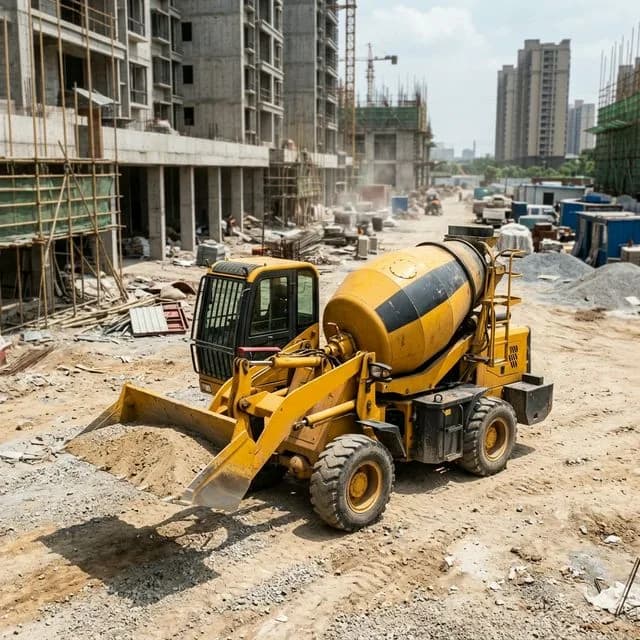
A self-loading concrete mixer is a mobile concrete machine that loads aggregate, meters water, mixes the batch, transports fresh concrete, and discharges it with one operator.
- Best For
- scattered housing projects, rural and mountain jobsites, contractors replacing ready-mix dependence
- Standards / QA
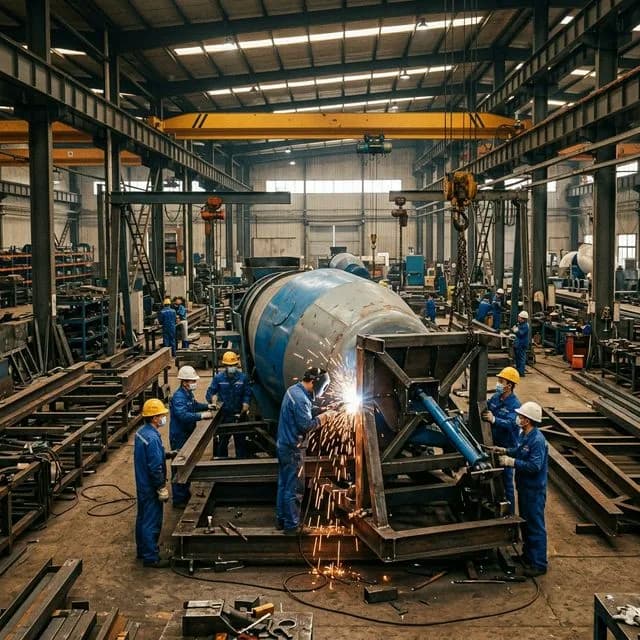
- factory load test before shipment, production inspection, export packing checklist
Why buyers shortlist Self-Loading Concrete Mixer
Integrated loading and batching
The front bucket loads directly from the stockpile, so the contractor does not need a separate loader for every batch.
Repeatable mix control
Weighing and water metering help the operator hold consistency instead of relying only on manual judgment.
Fresh concrete can travel with the machine
One chassis can batch, move, and discharge concrete where access is narrow or the pour points are scattered.
Built for rough duty cycles
Axles, hydraulics, and frame structure are designed for repeated loading and travel on unfinished roads.
Lower fleet complexity
The machine replaces part of the function of a loader, drum mixer, and internal transport workflow on small and mid-size sites.
Technical Specifications
| Model | Drum Yield | Engine Power | Drive | Travel Speed | Best Fit |
|---|---|---|---|---|---|
| SLM-1200 | 1.2 m3 | 55 kW | 4x2 | 25 km/h | Farm, repair, and village jobs |
| SLM-1800 | 1.8 m3 | 76 kW | 4x4 | 28 km/h | Housing and utility works |
| SLM-3500 | 3.5 m3 | 85 kW | 4x4 | 30 km/h | Road and municipal contractors |
| SLM-4000 | 4.0 m3 | 92 kW | 4x4 | 30 km/h | Commercial and infrastructure sites |
| SLM-6500 | 6.5 m3 | 110 kW | 4x4 | 32 km/h | High-volume fleet use |
Match capacity, power, and quote scope before you inquire
Start with the workload and site conditions, then use the recommended configuration summary to prefill the quote form with a cleaner request.
- Engine
- 85 kW diesel
- Drive
- 4x4
- Travel speed
- 30 km/h
- Reference output
- 8-10 batches per hour for municipal and road work
Use this as a shortlist range before freight, destination duties, and project-specific options are confirmed.
- -housing compounds and municipal infrastructure
- -contractors replacing outside ready-mix dependence
- -buyers wanting the broadest fit across project types
Clicking below will prefill the inline quote form with the selected model, power match, and reference price range so your inquiry reaches the sales team with a cleaner starting specification.
Request pricing for Self-Loading Concrete Mixer
Tell us the delivery destination, target output, and any special requirements. We will reply with a matched recommendation.
Buyer Guide
Start with the real workload, not the largest available specification. For self-loading concrete mixer, confirm the target output, transport or placement workflow, local service conditions, and whether the customer will benefit more from mobility, tighter process control, or lower manual handling. In most cases, buyers make better decisions when they compare the full operating routine instead of looking only at purchase price or nominal capacity.
Project Examples
Recent use cases that show how buyers apply this equipment in the field.
Self-Loading Mixer Helped a Housing Contractor Stabilize Daily Output in the Philippines
A regional housing contractor reduced delivery delays and improved pour scheduling by moving from outside ready-mix dependence to a self-loading mixer workflow.
- -The customer needed a solution for scattered housing plots, narrow internal roads, and unstable outside ready-mix timing.
- -BatchMixPro recommended a 3.5 m3 self-loading mixer instead of a larger plant-and-truck combination.
- -The delivered package centered on electronic weighing, enclosed cabin, and a starter spare-parts kit.
Brazil Buyer Used a Self-Loading Mixer to Expand a Rural Precast Yard Without a Full Plant Investment
A Brazilian precast and farm-infrastructure supplier improved batching control and internal yard mobility with a self-loading mixer before committing to a full stationary line.
- -The customer needed a solution for better mix consistency and internal yard movement without locking too much capital into a permanent plant too early.
- -BatchMixPro recommended a self-loading mixer positioned as a staged growth step between manual batching and a full fixed line.
- -The delivered package centered on electronic weighing, standard water system, spare parts, and stockpile-layout guidance.
Self-Loading Concrete Mixer vs a site drum mixer plus wheel loader
Use this comparison to frame the equipment around workflow, mobility, and production expectations.
| Dimension | Self-Loading Concrete Mixer | a site drum mixer plus wheel loader |
|---|---|---|
| Crew demand | One operator can manage the core cycle | Two to three people are common |
| Batch control | Integrated weighing and water control | More dependent on manual batching discipline |
| Site mobility | Carries mixed concrete across the site | Usually needs separate transport support |
| Equipment count | One machine covers multiple tasks | Multiple machines must be coordinated |
Frequently Asked Questions
What capacity range is typical for self-loading concrete mixer?
Self-Loading Concrete Mixer buyers usually compare models in the 1.2 to 6.5 m3 drums range because that covers most mainstream contractor and supplier applications.
How much does self-loading concrete mixer cost?
Factory pricing commonly starts around USD 18,900 and can rise toward USD 62,000 once capacity, options, and export scope increase.
What power or drive setup is common?
The most common configuration uses 55 kW to 110 kW diesel, depending on model size, duty cycle, and the target market.
How long is the usual lead time?
A normal production lead time is about 20 to 35 production days, plus sea freight and inland delivery to the final site.
What should buyers confirm before ordering?
The first checks should be real output demand, site layout, local operator skill, and whether startup spare parts should be bundled with the machine.
Can BatchMixPro support export service planning?
Yes. We can prepare packing plans, startup spare-parts lists, and remote commissioning references matched to the selected configuration.