Skid Steer Concrete Mixer for Sale
Skid Steer Concrete Mixers are a practical choice for contractors who already run skid steer loaders and want to add mixing capability without adding a full separate machine. Compared with generic alternatives, the machine or system gives the buyer tighter control over how concrete is mixed, stored, or delivered around the actual job workflow.
Typical applications include utility work, fence posts, curb repair, landscaping. In these scenarios, buyers normally care less about headline brochure claims and more about whether the equipment improves daily control, reduces coordination friction, and fits the labor, transport, and service conditions of the project.
BatchMixPro positions this product around buyers who need controlled on-site concrete production without the cost and complexity of a full batching plant. The current range covers 200 to 600 L batches with 45 to 80 L/min hydraulic flow, plus export-ready packing, startup spare-parts support, and configuration advice for overseas buyers.
A skid steer concrete mixer is a hydraulic attachment that allows a skid steer loader to mix, carry, and discharge concrete directly at the jobsite.
- Best For
- utility and fencing crews, landscaping and hardscape contractors, buyers who already run skid steer fleets
- Standards / QA
- hydraulic motor test, hoses and coupler inspection, weld and paint final check
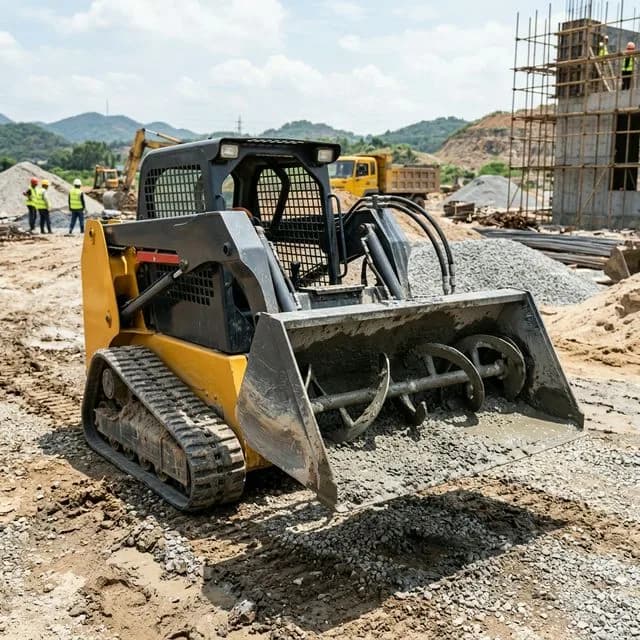
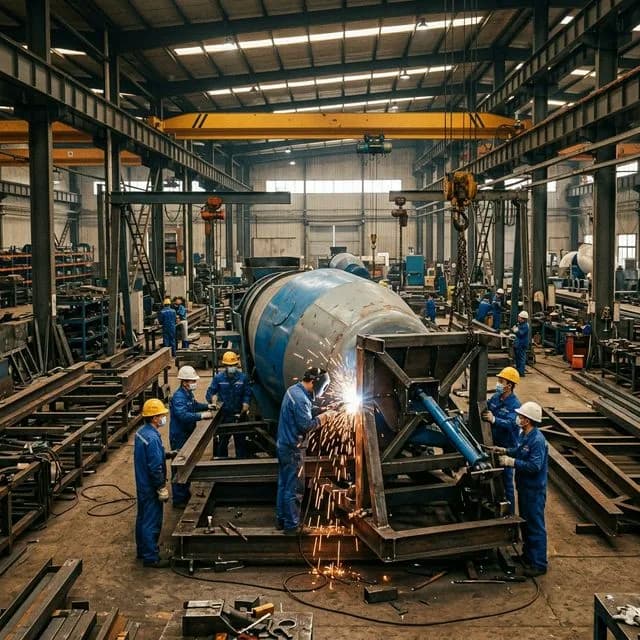
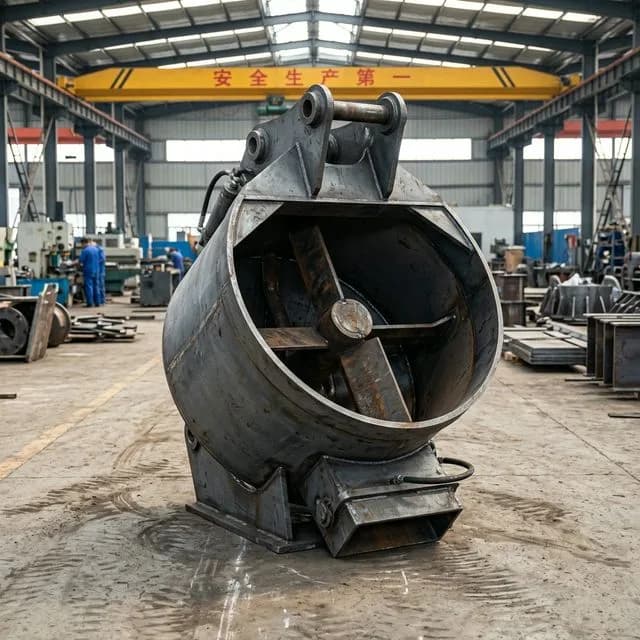
Why buyers shortlist Skid Steer Concrete Mixer
Uses the host loader as the power unit
Hydraulic drive keeps the attachment compact and avoids adding a standalone mixer to the fleet.
Precise placement in tight areas
The loader arm helps position the mix where wheelbarrows and larger mixers are less efficient.
Fast task change
The same skid steer can load materials, mix, transport, and place concrete within one workflow.
Controlled discharge options
Side or bottom discharge designs help match the attachment to posts, trenches, or curb work.
Low fleet-expansion cost
Contractors add mixing capability by upgrading an existing skid steer instead of buying a dedicated mixer vehicle.
Technical Specifications
| Model | Mixing Volume | Required Flow | Discharge Type | Weight | Host Machine |
|---|---|---|---|---|---|
| SSM200 | 200 L | 45 L/min | Side chute | 290 kg | Compact skid steer |
| SSM300 | 300 L | 55 L/min | Side chute | 380 kg | Standard skid steer |
| SSM450 | 450 L | 70 L/min | Bottom gate | 520 kg | High-flow skid steer |
| SSM600 | 600 L | 80 L/min | Bottom gate | 650 kg | Large skid steer / CTL |
Request pricing for Skid Steer Concrete Mixer
Tell us the delivery destination, target output, and any special requirements. We will reply with a matched recommendation.
Buyer Guide
Start with the real workload, not the largest available specification. For skid steer concrete mixer, confirm the target output, transport or placement workflow, local service conditions, and whether the customer will benefit more from mobility, tighter process control, or lower manual handling. In most cases, buyers make better decisions when they compare the full operating routine instead of looking only at purchase price or nominal capacity.
Skid Steer Concrete Mixer vs a standalone portable mixer
Use this comparison to frame the equipment around workflow, mobility, and production expectations.
| Dimension | Skid Steer Concrete Mixer | a standalone portable mixer |
|---|---|---|
| Fleet efficiency | Leverages the skid steer already on site | Independent machine |
| Placement control | Excellent positioning control | Less precise in tight access |
| Host-machine dependence | Needs compatible hydraulic loader | No host machine required |
| Best-fit work | Utility, fencing, and landscaping | General small-site work |
Frequently Asked Questions
What capacity range is typical for skid steer concrete mixer?
Skid Steer Concrete Mixer buyers usually compare models in the 200 to 600 L batches range because that covers most mainstream contractor and supplier applications.
How much does skid steer concrete mixer cost?
Factory pricing commonly starts around USD 2,400 and can rise toward USD 9,800 once capacity, options, and export scope increase.
What power or drive setup is common?
The most common configuration uses 45 to 80 L/min hydraulic flow, depending on model size, duty cycle, and the target market.
How long is the usual lead time?
A normal production lead time is about 10 to 18 production days, plus sea freight and inland delivery to the final site.
What should buyers confirm before ordering?
The first checks should be real output demand, site layout, local operator skill, and whether startup spare parts should be bundled with the machine.
Can BatchMixPro support export service planning?
Yes. We can prepare packing plans, startup spare-parts lists, and remote commissioning references matched to the selected configuration.