Transit Mixer Truck for Sale
Transit Mixer Trucks are a practical choice for buyers who already batch centrally and need reliable fresh-concrete delivery over varying road and traffic conditions. Compared with generic alternatives, the machine or system gives the buyer tighter control over how concrete is mixed, stored, or delivered around the actual job workflow.
Typical applications include ready-mix fleet work, urban dispatch, infrastructure supply, regional delivery routes. In these scenarios, buyers normally care less about headline brochure claims and more about whether the equipment improves daily control, reduces coordination friction, and fits the labor, transport, and service conditions of the project.
BatchMixPro positions this product around ready-mix and project fleets that need to protect fresh concrete during transport from plant to pour point. The current range covers 3 to 12 m3 drums with truck chassis matched to local axle and road rules, plus export-ready packing, startup spare-parts support, and configuration advice for overseas buyers.
A transit mixer truck is a concrete delivery vehicle that keeps concrete agitated during transport from the batching plant to the placement point.
- Best For
- ready-mix fleets, urban commercial projects, batching plants serving multiple delivery points
- Standards / QA
- hydraulic test before dispatch, drum rotation trial, chassis-equipment matching review
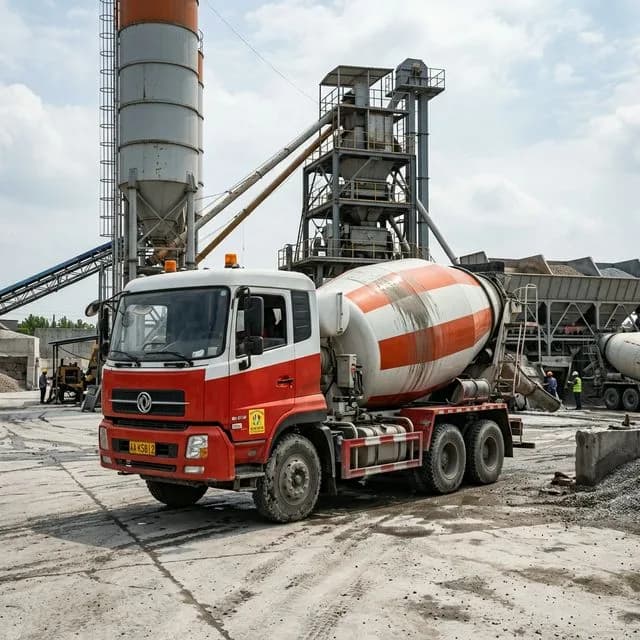
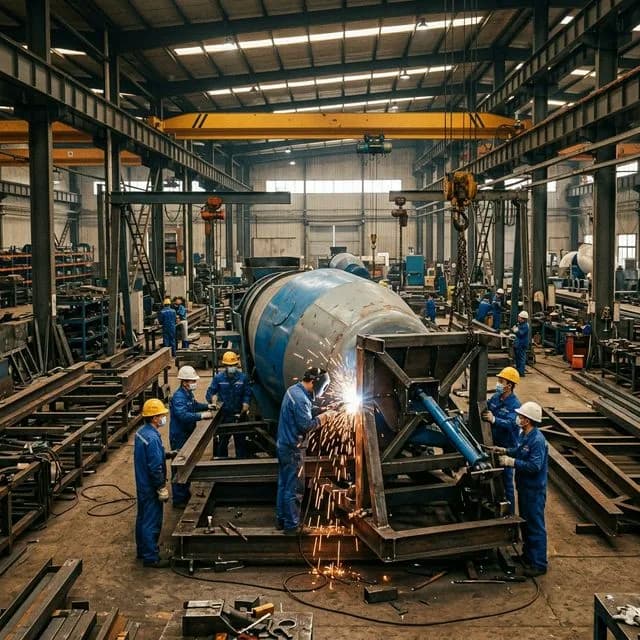
Why buyers shortlist Transit Mixer Truck
Stable drum agitation
Hydraulic drive and blade geometry help protect slump and reduce segregation during transport.
Fleet-ready chassis matching
Configurations can be matched around local payload rules, road grades, and service support.
Controlled discharge
Chute layout and drum speed improve unloading efficiency at pumps, forms, and curbside placements.
Heavy-duty wear design
Drum shell thickness and liner selection are chosen around abrasive mixes and repeated commercial cycles.
Lower maintenance interruption
Accessible hydraulic and washout systems simplify daily fleet inspection.
Technical Specifications
| Model | Drum Volume | Chassis | Hydraulic Drive | Water Tank | Application |
|---|---|---|---|---|---|
| TM3 | 3 m3 | 4x2 | PMP + Rexroth | 300 L | Compact city delivery |
| TM6 | 6 m3 | 4x2 / 6x4 | PMP + Eaton | 450 L | General ready-mix fleet |
| TM8 | 8 m3 | 6x4 | PMP + Rexroth | 500 L | Commercial dispatch |
| TM10 | 10 m3 | 8x4 | PMP + Bonfiglioli | 650 L | High-volume supply |
| TM12 | 12 m3 | 8x4 | PMP + Rexroth | 800 L | Infrastructure and urban fleet |
Request pricing for Transit Mixer Truck
Tell us the delivery destination, target output, and any special requirements. We will reply with a matched recommendation.
Buyer Guide
Start with the real workload, not the largest available specification. For transit mixer truck, confirm the target output, transport or placement workflow, local service conditions, and whether the customer will benefit more from mobility, tighter process control, or lower manual handling. In most cases, buyers make better decisions when they compare the full operating routine instead of looking only at purchase price or nominal capacity.
Project Examples
Recent use cases that show how buyers apply this equipment in the field.
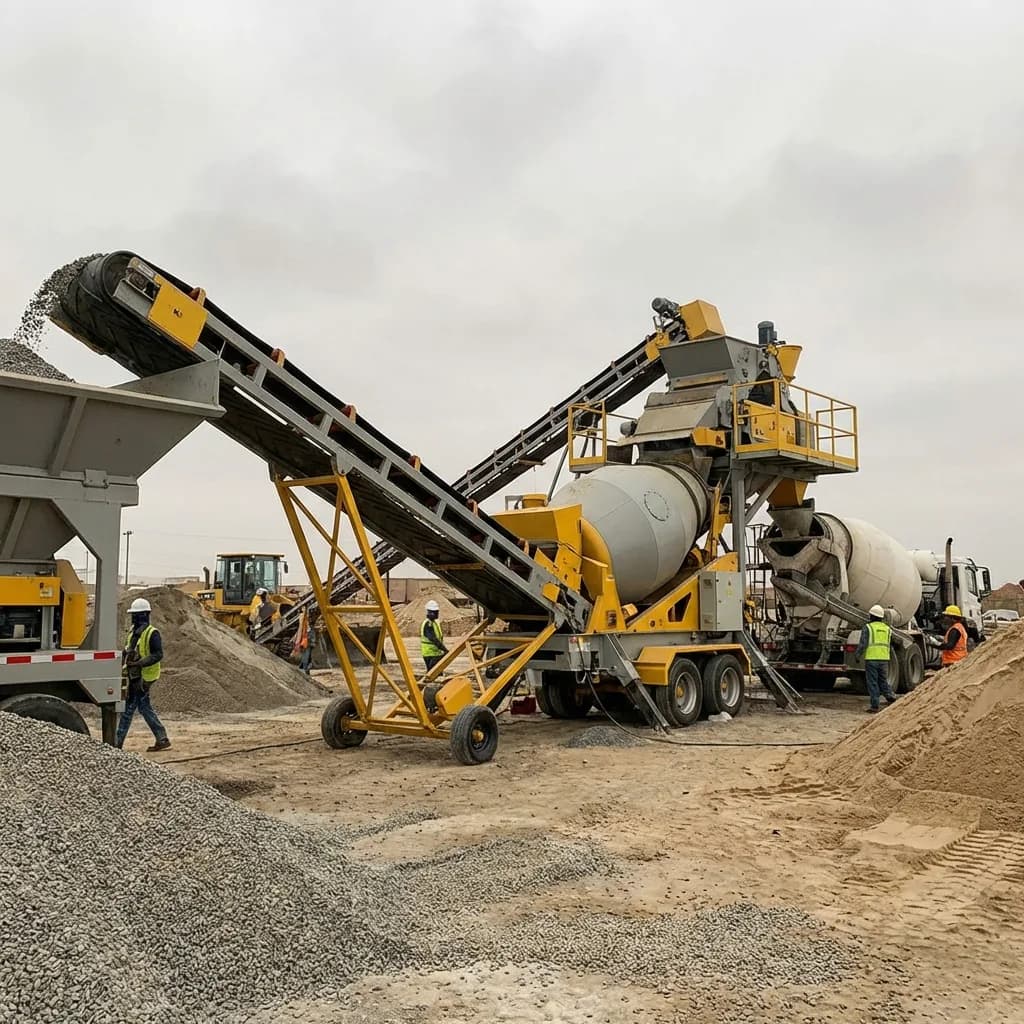
New-City Contractor in Egypt Chose a Mobile Batching Plant for Controlled Supply and Faster Site Deployment
A contractor working on a new-city development in Egypt selected a mobile batching plant to secure controlled concrete supply close to the project while keeping future redeployment options open.
- -The customer needed a solution for schedule-sensitive pours, warm conditions, and the need for controlled site supply without an oversized permanent installation.
- -BatchMixPro recommended a mobile plant package sized around real dispatch rhythm and future redeployment instead of maximum theoretical output.
- -The delivered package centered on mobile plant modules, cement storage, electrical controls, and maintenance planning for heat and dust conditions.
Transit Mixer Truck vs site-mixed delivery with ordinary trucks
Use this comparison to frame the equipment around workflow, mobility, and production expectations.
| Dimension | Transit Mixer Truck | site-mixed delivery with ordinary trucks |
|---|---|---|
| Concrete protection | Fresh concrete remains agitated | Higher segregation and delay risk |
| Dispatch efficiency | Designed for repeated delivery cycles | More improvised workflow |
| Driver workflow | Integrated truck-and-drum operation | Needs extra site handling steps |
| Commercial suitability | Best for regular commercial supply | Suitable only for exceptional low-volume use |
Frequently Asked Questions
What capacity range is typical for transit mixer truck?
Transit Mixer Truck buyers usually compare models in the 3 to 12 m3 drums range because that covers most mainstream contractor and supplier applications.
How much does transit mixer truck cost?
Factory pricing commonly starts around USD 68,000 and can rise toward USD 185,000 once capacity, options, and export scope increase.
What power or drive setup is common?
The most common configuration uses truck chassis matched to local axle and road rules, depending on model size, duty cycle, and the target market.
How long is the usual lead time?
A normal production lead time is about 30 to 45 production days, plus sea freight and inland delivery to the final site.
What should buyers confirm before ordering?
The first checks should be real output demand, site layout, local operator skill, and whether startup spare parts should be bundled with the machine.
Can BatchMixPro support export service planning?
Yes. We can prepare packing plans, startup spare-parts lists, and remote commissioning references matched to the selected configuration.